
Showing posts with label Earth. Show all posts

Monday, June 4, 2012

SpaceX Makes Strides in for Commercial Space Travel

On today's date just two years ago today, SpaceX, a space transportation company in California, launched for the first time the Falcon 9 rocket. This was (and is) an important occurrence in the timeline of development of commercial space travel...aka regular people getting to travel in space. The Falcon 9 was launched into low-Earth orbit and SpaceX used the launch to get a closer look at the aerodynamic conditions on the spacecraft and learn more about how a carrier rocket would perform.

The spacecraft orbited the Earth more than 300 times before reentering our atmosphere on June 29. Some future projects that SpaceX is working on are the Falcon Heavy launch system and a NASA robotic mission to Mars in 2018.

The Heavy is based on the same technology used in the Falcon 9 and if the construction of this vessel goes as planned, it will be the most powerful rocket in America since the Saturn V of the Apollo era. Falcon Heavy is planned to be able to send a crew-led Dragon spacecraft on lunar orbiting missions. Another plan is that it will be used to send a specially adapted unpiloted Dragon on a Mars landing mission. The founder of SpaceX said he wants his company to help make a way for humans to have a permanent presence on Mars.
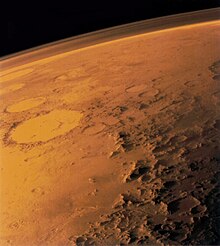

Do you think you'd want to go to Mars? If you could visit any planet in our solar system, which one would you choose and why? Maybe in a few years it will be possible!

Tuesday, May 3, 2011

Staying Safe in All Weather

{Credit: NASA , Jesse Allen and Robert Simmon, using USGS Landsat data}

The south is still in recovery mode after the storms that ripped through the area in the last few weeks. Some NASA images taken via Landsatellite are helping scientists understand the paths of the tornadoes. You might have heard your parents talking about the storms, or maybe you even live near where they took place. Storms that involve tornadoes should be taken seriously, so it's good to be informed about what to do just in case. If you hear grown-ups talking about a tornado watch, this just means that the current weather conditions are right to possibly produce a tornado. Think of it like this...during a tornado watch, the weather services are just on the lookout for tornadoes, watching for a possible one.

{Credit: NASA MODIS Rapid Response Team, Jeff Schmaltz}

If you hear that a tornado warning has been issued, this means an actual tornado has been spotted in the area. This is when it's time to head to a safe room, maybe a basement or bathroom with no windows. Anything unknown can seem scary, but with the right information and awareness, we can all take the necessary precautions and stay safe.

For more information about staying safe and informed about weather and storms, visit this site and become a Disaster Action Kid! Stay safe friends!


Tuesday, April 19, 2011

Scientists of Slime

Since this Friday is Earth Day and April is Earth Month, today’s post celebrates an important, but unsung hero of our Earth’s ecosystem: green slime. The Sea-viewing Wide Field-of-view-Sensor or SeaWiFS is an instrument that was carried on the OrbView-2 spacecraft and sent data to scientists about phytoplankton and algae in Earth’s bodies of water.

In the early 1990s, Mary Cleave, a member of NASA astronaut corps, viewed different shades and colors of ocean water during time spent in low-Earth orbit. From space, these different blues and greens are much more visible. Floating bits of plant life tell scientists a lot about the biological life, both on a planet’s land and water surfaces.

The large dark blue areas of ocean represent zones that are free of chlorophyll and the green spots show scientists these regions are “highly productive.” Using this type of technology allows scientists to identify different problems that could have negative effects on our ecosystem, such as the red areas of the Chesapeake Bay, where phytoplankton and algae have sort of taken over and exist at possibly harmful levels.


Looking at the map, can you see the brown patches? These stand for areas in the west that are arid and dry, where the dark green places are thick forests and grasslands. Can you spot where you live on the map? Is it somewhere green or is it brown? Maybe you live near the coastline where the algae are growing.

After 13 years of collecting data, the SeaWiFS stopped communicating with its data stations and was declared unrecoverable, but the information it collected during that time is very valuable to scientists and will help them understand more about our Earth and its ever-changing ecosystem.

{1st image via Flickr Creative Commons, 2nd image via NASA}

Tuesday, April 12, 2011

Space History: 50 Years Later


Have you ever taken a trip only to ask your parents “are we there yet?” Your trip might have taken several hours or even days, depending on how far away your destination was. One very important trip that took place on this day in history lasted only 108 minutes, or 12 minutes shy of 2 hours. Fifty years ago today, Russian cosmonaut Yuri Gagarin became the first person in space.


In a Vostok 1 spherical capsule spacecraft, Yuri blasted off from Baikonur Cosmodrome at 6:07 a.m. and was home in time for lunch. The vessel traveled so fast, it broke free of the Earth’s gravitational pull and began orbiting around the planet. The trip around Earth took less than an hour and a half because Yuri was going about 17,500 miles per hour.


Yuri’s vehicle did not have any thrusters to help it slow down as it came back to Earth and he was forced to eject from the spacecraft. This detail was kept secret since it might have caused this space flight to be seen as less than successful, but Yuri was indeed the first person in space. The next time you watch a 2 hour movie, think about the fact that you could have been around the Earth and back in the same amount of time. Sort of gives a whole new meaning to “are we there yet?”

{image of Yuri via http://www.nasa.gov/topics/history/features/gagarin/gagarin.html}

Friday, April 1, 2011

Don't Be an April Fool...Celebrate Earth Month!

{image via globalgreen.org}


Earth Day is April 22, but this year, let's celebrate our earth all month long. Many communities are hosting events during the month of April which will allow citizens to come out and participate in clean-ups, recycling drives and other fun activities. Check your local community calendars to see if there are fun ways to get involved in your neighborhood. This could be a great way for your whole family to come together and spend a day doing something to help the Earth.


Maybe your family already recycles, but there is always something more you can do in your daily routine to be more conscious. Things as simple as turning off the lights when you leave the room or turning off the water while brushing your teeth can go a long way towards saving resources. Instead of packing your lunch box with disposable plastic bags, why not ask your parents if you can get reusable plastic containers that are free of BPAs and other chemicals. Walk or ride your bike instead of driving in a car. Don't litter. What are some other examples you can think of that would help you celebrate the Earth this month?

Tuesday, March 1, 2011

An Outerspace Workout


You’ve probably had a grown-up tell you to eat your fruits and veggies and drink milk because they help you build strong bones and muscles. Astronaut Stephen Bowen must have gotten plenty of healthy foods while he was growing up because he was able to hold an 800-pound piece of equipment for half an hour on Monday. An astronaut on the space shuttle Discovery’s final voyage, Bowen was participating in a space walk on Monday when the robotic system shutdown.


The space station has a small platform on the end of a 58-foot robotic arm. This is used to carry astronauts where they need to go when they are spacewalking. After a couple of hours, a work station controlling the robot arm shut down and it took the operators about half an hour to get it working again. During this time Bowen was stuck in space holding the 5x4 ft broken cooling pump.


You might be thinking it is impossible for one man to lift something so heavy, but in space where the effects of gravity are much reduced, it is possible. To learn more about gravity on Earth vs. gravity on Space, check out this NASA video! Even though lifting 800 pounds in space is a lot easier than lifting it on Earth, you should still pay attention when somebody tells you to eat your fruits and veggies. Don’t we all want to grow up big and strong?


Learn more about gravity by visiting this great site!